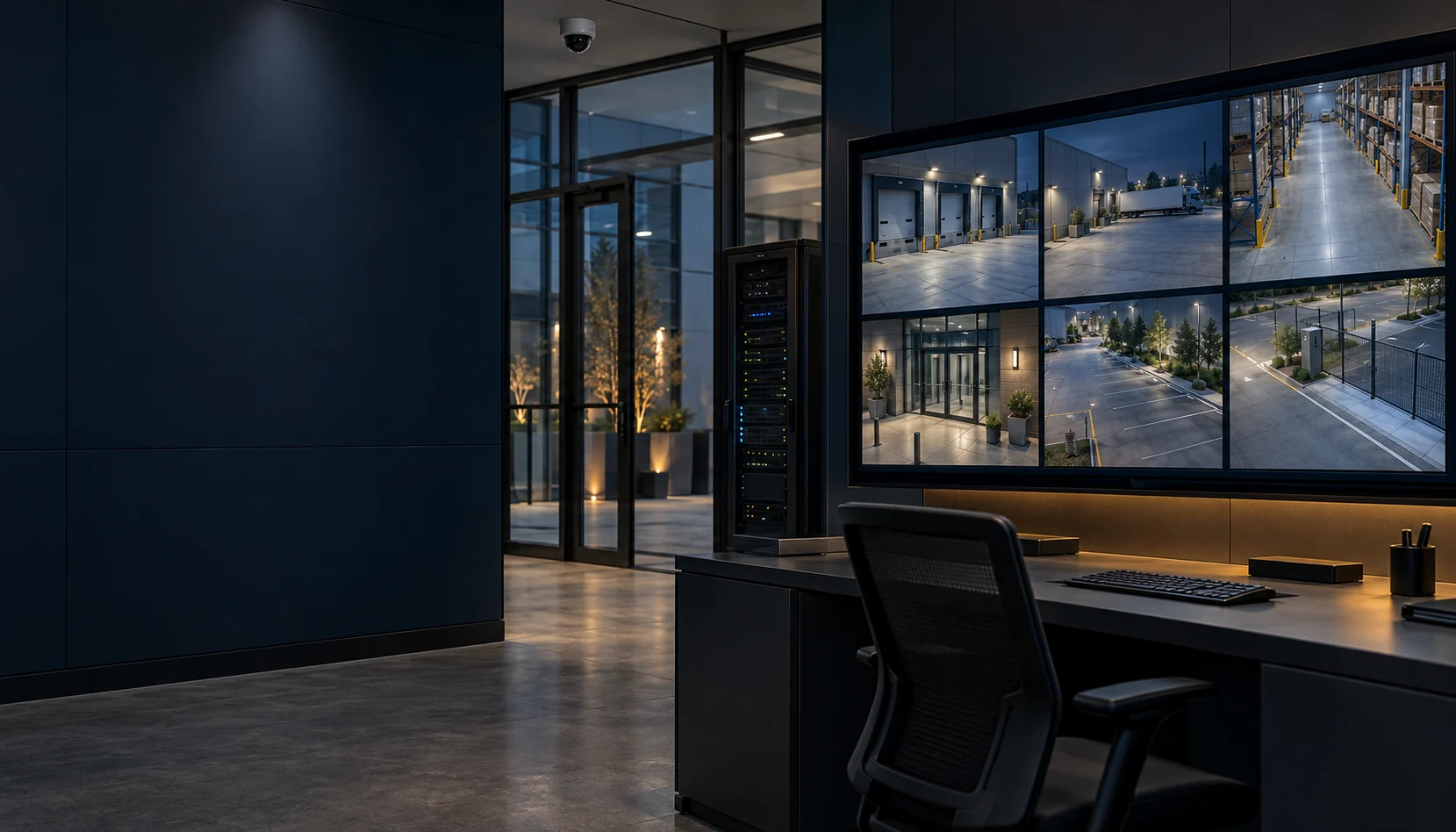
Project 01 / Air-gapped video AI
Video
surveillance.
For an a16z-backed security-technology company.
The project
Video at the centre.
Infrastructure underneath.
- Client
- An a16z-backed security-technology company
- Our work
- Video surveillance
- Environment
- Air-gapped, inside the customer site
- Technology
- NVIDIA L40S · Kubernetes · MediaMTX
- Case study
- Video intelligence, fully offline
- Across the stack
- Infrastructure · Applied AI
The service model
From camera feeds
to a shared view.
Inside the customer site, live streams pass through MediaMTX to AI inference on shared GPUs.
Engineering spotlight / Air-gapped NVIDIA
Live video AI.
No internet required.
An air-gapped Kubernetes platform that runs video AI on shared NVIDIA GPUs inside the customer site, with every install and update delivered offline.
Faster incident response
Video AI runs locally, inside the customer site.
Less deployment time
Helm-standardised rollouts from an offline registry.
Better GPU utilisation
GPU slicing and time-slicing share each card across streams.
Reported results for this engagement, also covered in the video intelligence case study.
The challenge
Three constraints.
One closed site.
Surveillance AI had to run where the cameras are, with no internet connection.
No internet.
Video AI had to run fully offline, inside the customer site.
Idle GPUs.
Expensive GPUs sat idle between streams.
Slow releases.
Releases into the air-gapped site took days.
The operating stack
Every layer,
inside the perimeter.
 Kubernetes
 NVIDIA
 Prometheus
Built to install, update and run with no internet connection. Observability and security run across the platform.
Video applications
Video AI services · Monitoring views
Stream routing
MediaMTX, scaled horizontally for live streams
Model serving
Inference workloads on shared GPUs · Helm charts
GPU enablement
NVIDIA GPU Operator · GPU slicing · Time-slicing · DCGM
Kubernetes platform
Air-gapped Kubernetes · Offline registry
Hardware
NVIDIA GPU servers inside the customer site
The fleet
Inside the perimeter.
Nothing outside it.
320 live camera streams on 32 NVIDIA GPUs, run by a platform that has never been connected to the internet.
Platform and registry.
Kubernetes control plane, the offline registry, Prometheus and Grafana.
MediaMTX.
Ingests and routes 320 live streams, scaled horizontally.
32 NVIDIA L40S.
Sliced and time-shared, running detection and tracking models across every stream.
Observability
DCGM · Prometheus · Grafana
Live telemetry on stream health and GPU load.
Alert rules and runbooks written for a site with no internet connection.
Security
Air gap · Offline registry · Kubernetes RBAC
Images and charts reach the site only through the offline registry. Nothing is pulled from the internet.
Offline delivery
Every update crosses
the air gap the same way.
Installs and updates arrive as one package, load into the local registry and roll out with Helm.
- 01
Build
Images and Helm charts
- 02
Scan
Checked before export
- 03
Package
Offline bundle
- 04
Transfer
Into the perimeter
- 05
Load
Offline registry
- 06
Roll out
Standard Helm release
- 07
Validate
Live streams and GPU load
- 08
Operate
DCGM telemetry
How GPUs are shared between streams
The NVIDIA GPU Operator manages drivers and device plugins on every GPU node. GPU slicing and time-slicing let several video workloads share one card, so capacity no longer sits idle between streams.
How live streams scale
MediaMTX runs as a horizontally scaled service on Kubernetes. More streams mean more replicas, not a larger single server.
How the platform is observed offline
DCGM exporters send GPU metrics to Prometheus, and Grafana shows them beside stream health. Telemetry, dashboards and alerts all stay inside the perimeter.
The outcome
Local AI.
Better use of every GPU.
The same engagement is told from the client’s side in our video intelligence case study.
Video AI inside the site.
Streams, models and results stay within the customer’s perimeter.
Capacity in use.
Slicing and time-slicing turned idle cards into shared capacity.
Updates as routine.
A standard Helm rollout through the offline registry replaced releases that took days.
Bring this capability to your team
Private AI infrastructure
Explore the Sovereign Platform and the AI Control Plane: open models on your own hardware, on‑premises or fully air‑gapped.
Explore the service Read the case study Discuss your project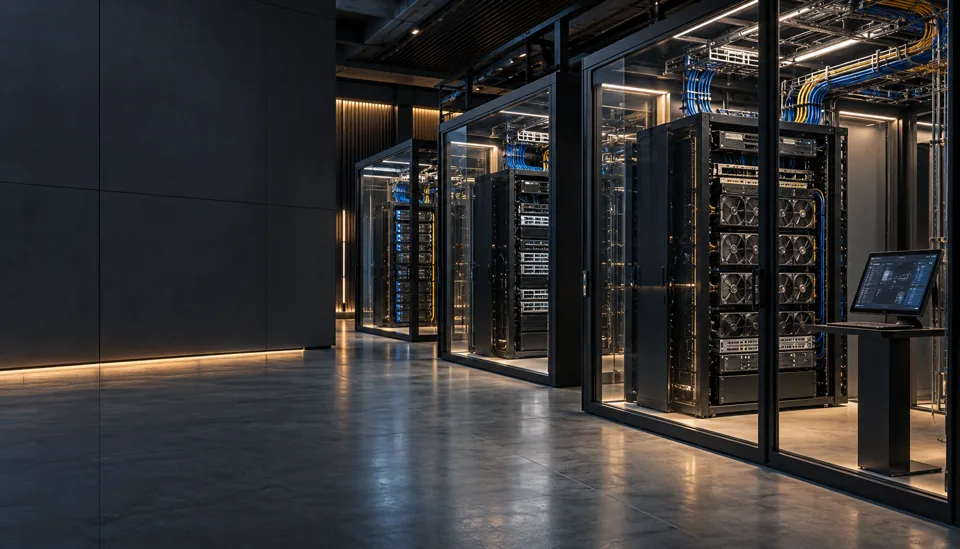
Next project / 02